
Coral reefs are among the most biodiverse and valuable ecosystems in the world, yet they are increasingly threatened by climate change, pollution, and destructive human activities. In response to this crisis, CGC launched the CoralCommUNITY Project, a community-driven initiative to restore degraded reefs through the collection and transplantation of “Corals of Opportunity” (COPs). Funded by the MOL Charitable Trust, this project focused on reviving coral populations at St. Felix by directly involving local communities in reef restoration efforts.
The project centred on innovative coral restoration techniques to maximise success rates while fostering community engagement. CGC established two operational coral farms, where COPs—coral fragments broken off due to human activity or natural disturbances—were collected, fragmented, and prepared for transplantation. These corals were acclimatised in nurseries before being transplanted onto degraded reef sites using various techniques, including attachment with epoxy, plastic nails, and spider-frame structures. Additionally, the project incorporated community involvement, training five local fishers in coral restoration techniques. Beyond direct participants, over 50 community members from St. Felix and Rivieres de Galets were sensitised on coral reef conservation through awareness programs. To ensure long-term impact, CGC has set up two dedicated monitoring stations to track coral growth, survival rates, and fish biodiversity improvements in restored areas.
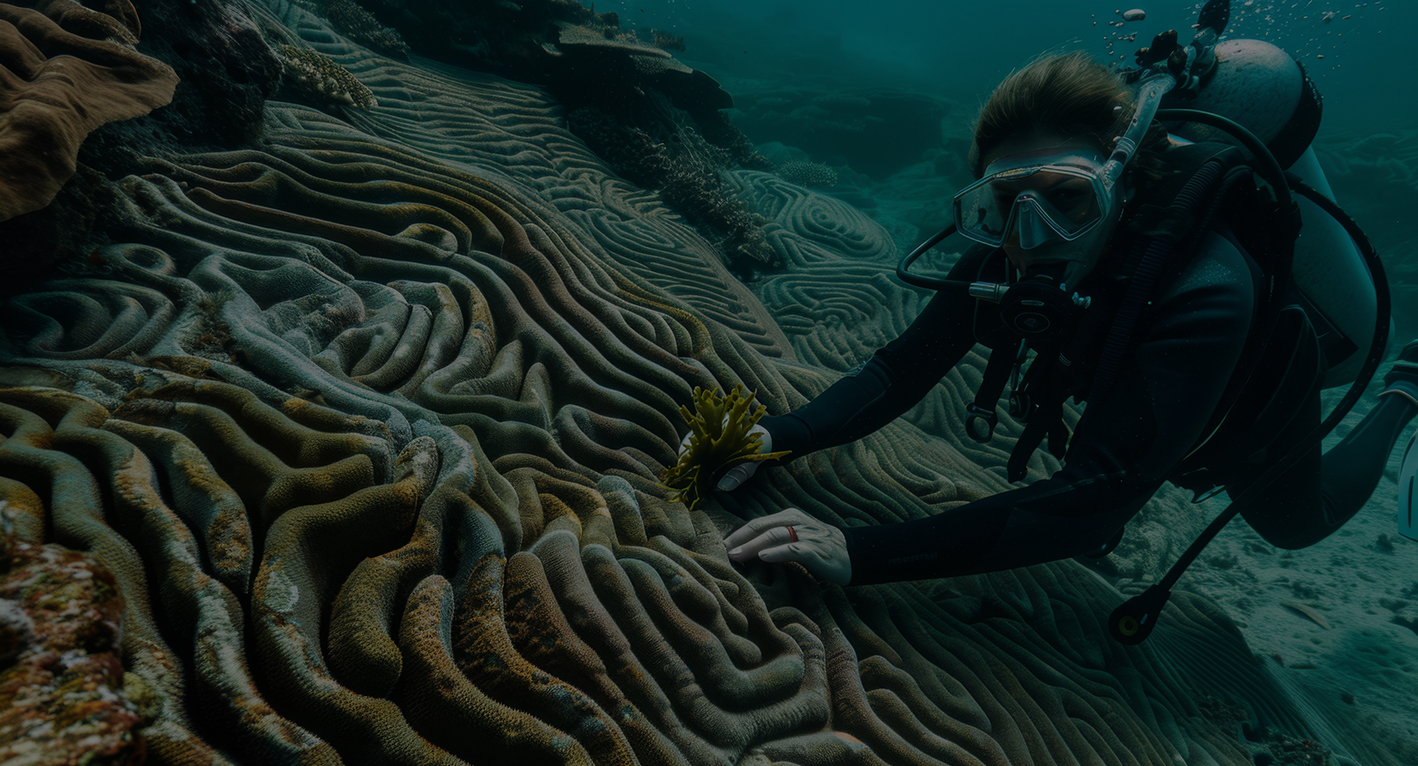
Coral reefs are among the most biodiverse and valuable ecosystems in the world, yet they are increasingly threatened by climate change, pollution, and destructive human activities. In response to this crisis, CGC launched the CoralCommUNITY Project, a community-driven initiative to restore degraded reefs through the collection and transplantation of “Corals of Opportunity” (COPs). Funded by the MOL Charitable Trust, this project focused on reviving coral populations at St. Felix by directly involving local communities in reef restoration efforts.
The project centred on innovative coral restoration techniques to maximise success rates while fostering community engagement. CGC established two operational coral farms, where COPs—coral fragments broken off due to human activity or natural disturbances—were collected, fragmented, and prepared for transplantation. These corals were acclimatised in nurseries before being transplanted onto degraded reef sites using various techniques, including attachment with epoxy, plastic nails, and spider-frame structures. Additionally, the project incorporated community involvement, training five local fishers in coral restoration techniques. Beyond direct participants, over 50 community members from St. Felix and Rivieres de Galets were sensitised on coral reef conservation through awareness programs. To ensure long-term impact, CGC has set up two dedicated monitoring stations to track coral growth, survival rates, and fish biodiversity improvements in restored areas.